• Director
  • Writer
  • Playwright & Translator
  • Teacher
  • Learning Disabilities
  • Thoughts
  • Contact
Menu

Stephen Unwin

Street Address
City, State, Zip
Phone Number
Director, Writer, Teacher

Your Custom Text Here

Stephen Unwin

  • Director
  • Writer
  • Playwright & Translator
  • Teacher
  • Learning Disabilities
  • Thoughts
  • Contact

Revisiting Man to Man

September 14, 2026 Stephen Unwin

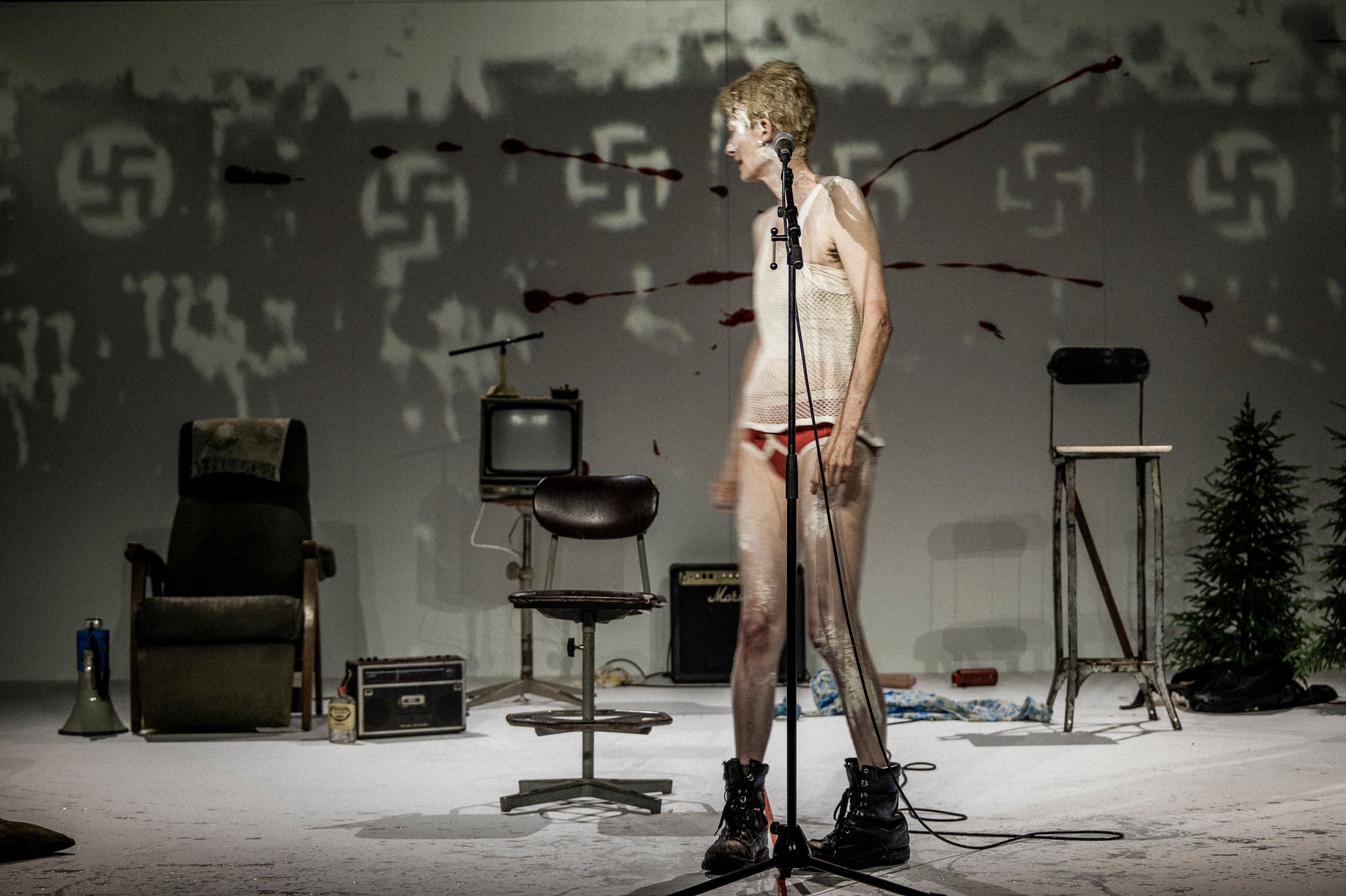
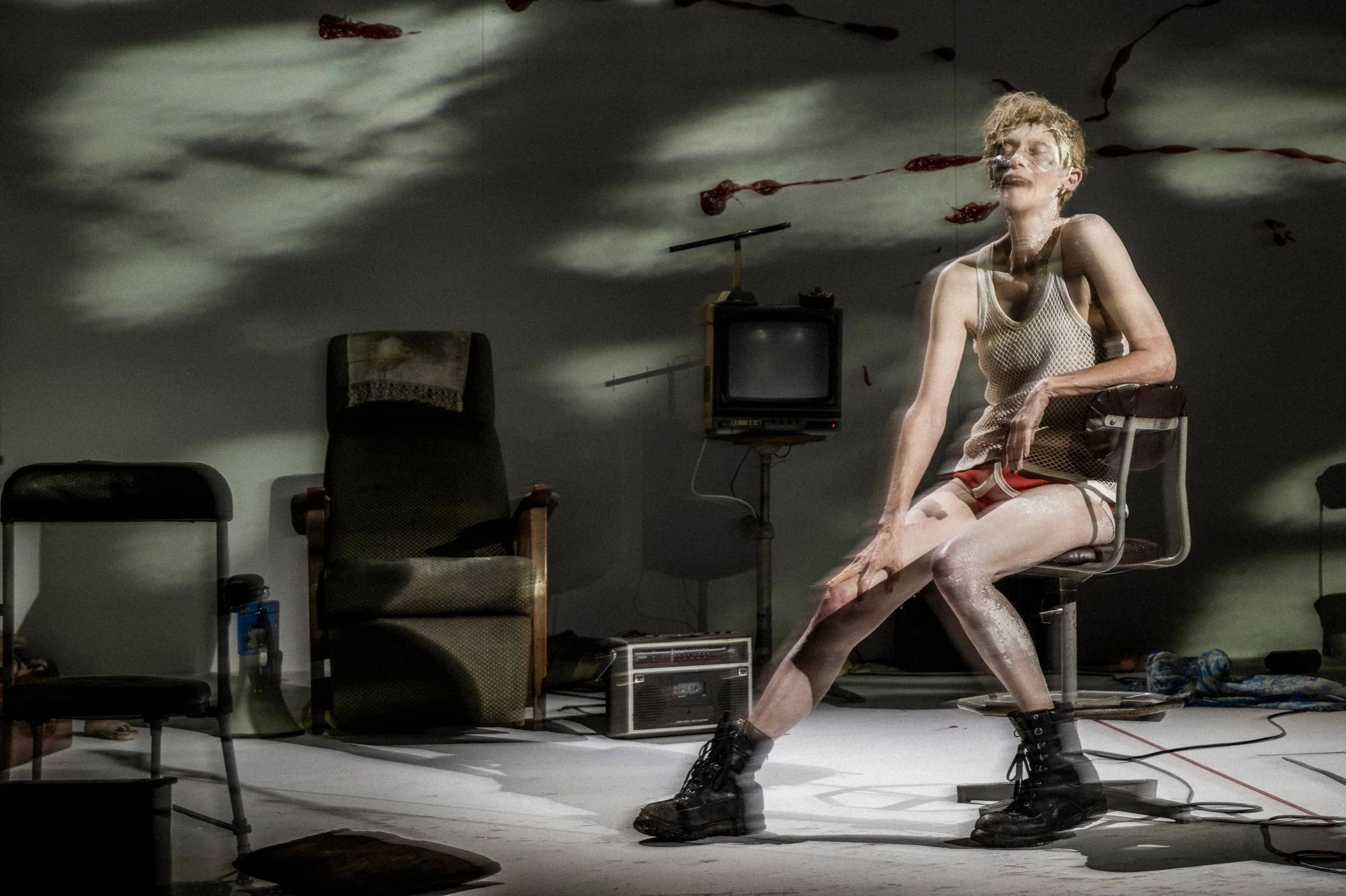
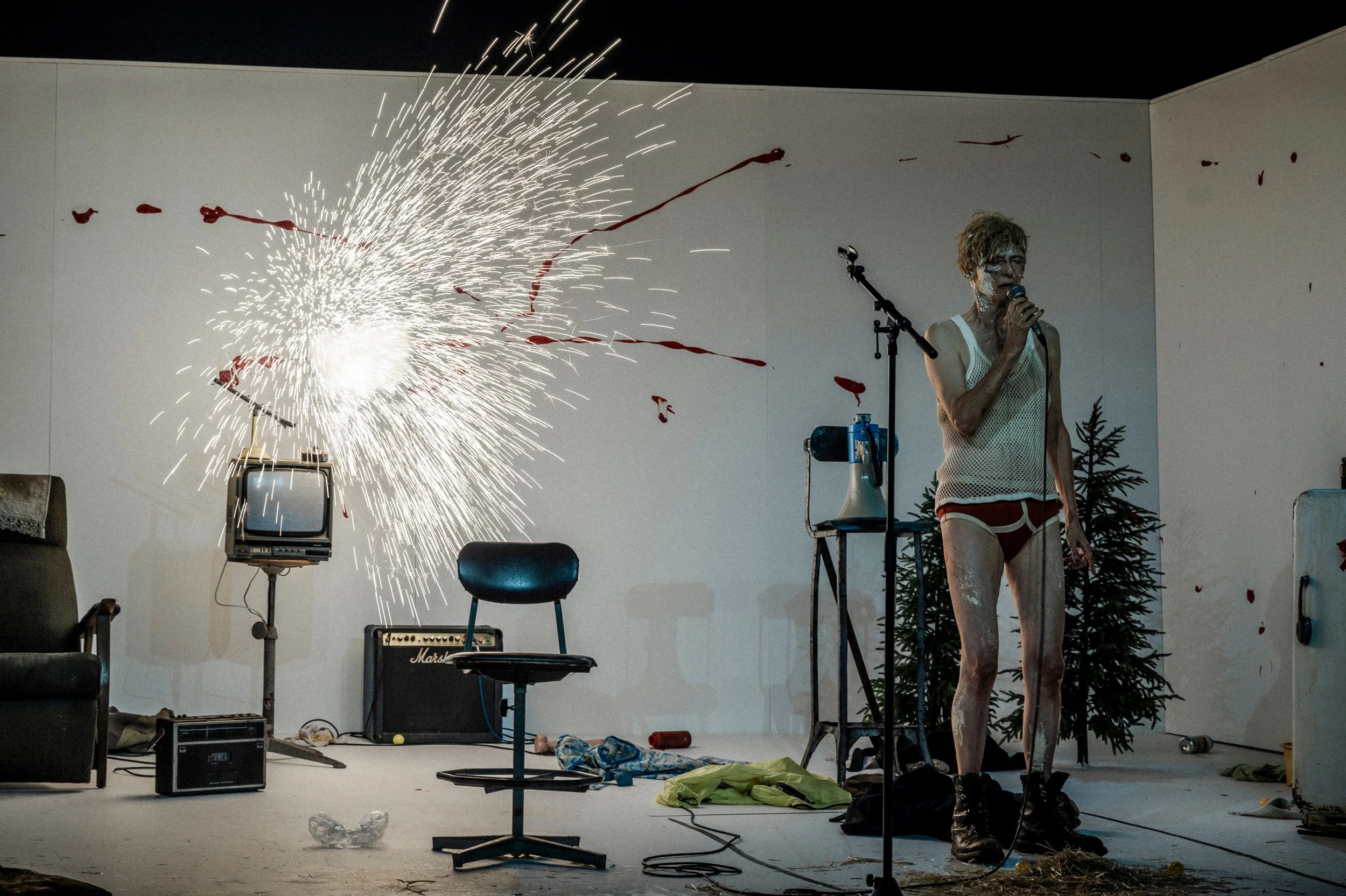
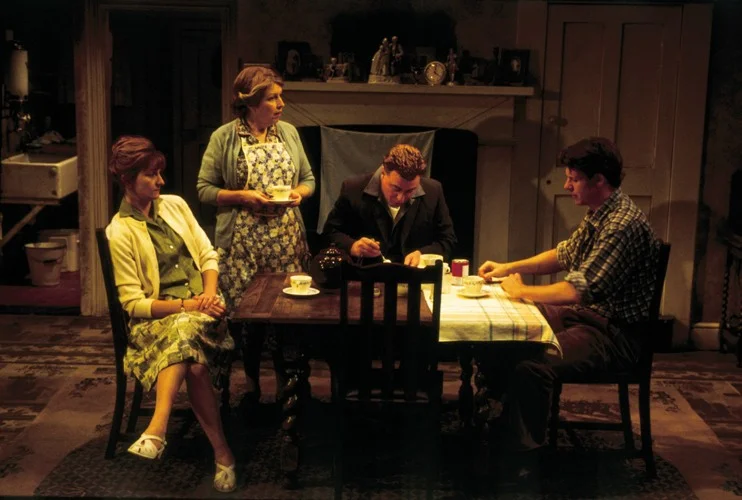
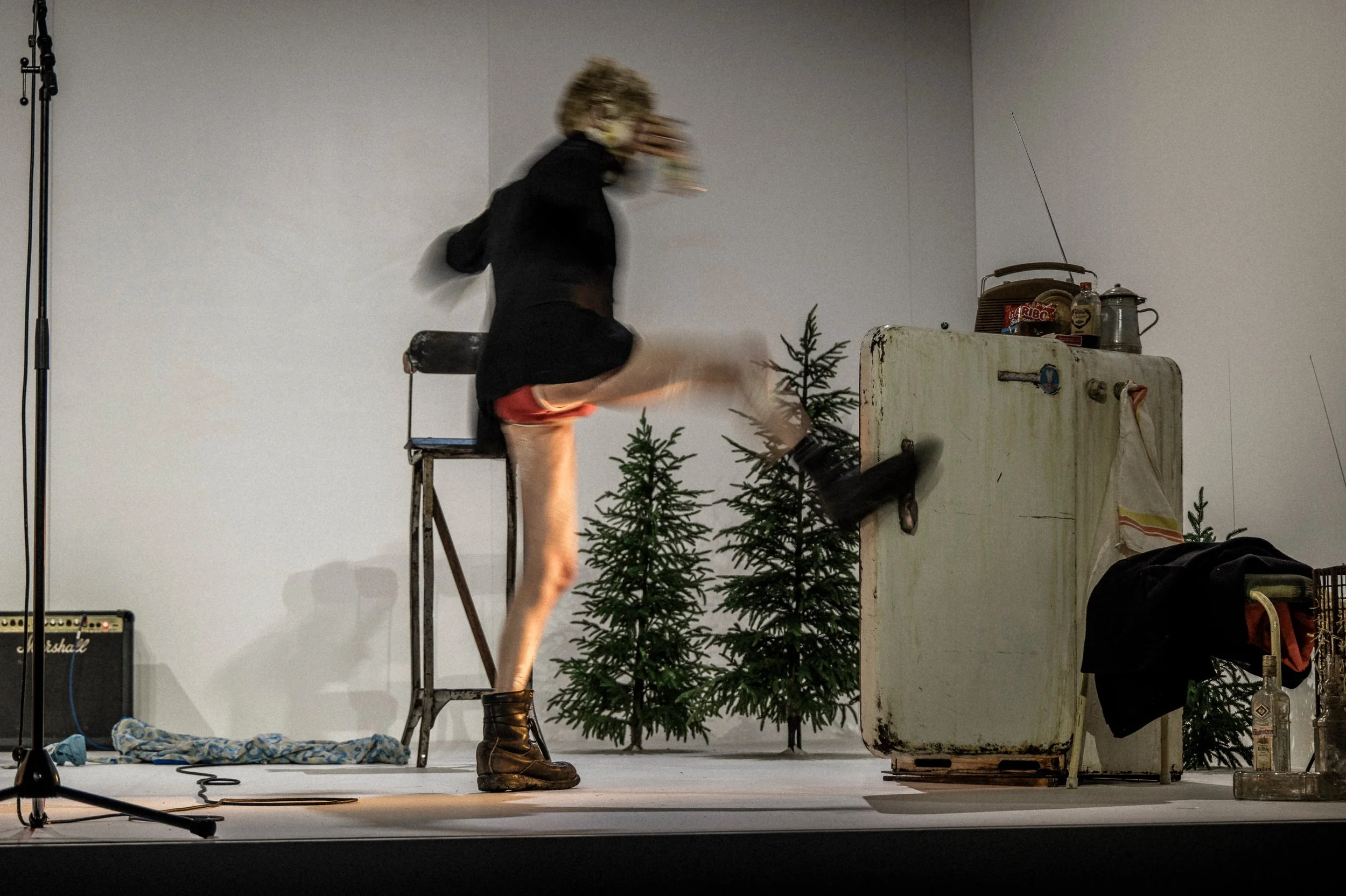
It was Pierre Audi, the much-mourned founder of the Almeida, who, way back in 1986, sent me a coffee-stained copy of Manfred Karge’s one-woman play, Jacke wie Hose. My German was just about good enough to realise that this was something that had to be seen, and soon Jenny Killick, the visionary Artistic Director of the Traverse in Edinburgh, commissioned a translation from Anthony Vivis and had the guts to give the go-ahead for what we called Man to Man.

Tilda Swinton and I were close friends from Cambridge, and we’d often worked together, both at university and in the real world, and she was the obvious choice to play the part. Along with the designer Bunny Christie and the lighting designer Ben Ormerod, we soon had a team, all in our twenties, all just starting out, all making it up as we went along. But our scratch production became a cause célèbre at the 1987 Edinburgh Festival, and transferred to the Royal Court for a three-week run the following year. In a theatre culture devoted to poetic naturalism, it surprised and challenged audiences. And it shaped us all.

Even then, Manfred Karge was a legendary figure. Born in poverty in Brandenburg before the war, his talent was spotted in 1961 by the great Helene Weigel (Bertolt Brecht’s wife, who had co-founded the Berliner Ensemble after the war, and ran it following his death) and she quickly engaged Karge as an actor. He also became a director, working in many of the leading German-speaking theatres. He wrote his first play Jacke wie Hose, which he staged with his partner, Lore Brunner, in Bochum in 1982. He returned to Berlin in 1993, where he still writes, directs and teaches.   

Karge’s play is a study of female survival in a terrifying world. Ella is a working-class woman who takes on the identity of her dead husband, Max, to endure what Brecht memorably dubbed ‘the dark times’: the twelve years (1933-45) of Nazi rule. But Karge extends this to include the division of Germany into two nation states (one communist, one capitalist) and the reconstruction that followed.

Manfred Karge is one of the last surviving links to the original Brecht theatre. And in true Brechtian spirit, he has written a deliberately conflicted figure: likeable one moment, repellent the next; insightful and blinkered; reactionary and visionary; but throughout, a woman from the lowest rung of society, caught up in the disastrous contradictions of her time. 

Thus, Man to Man shows a divided person in a divided culture in a divided land. It explores the deepest forms of alienation — social and political, sexual and psychological — in which identities are fluid and, as Marx said, all that is solid melts into air.  And in Karge’s two new scenes (one written specifically for this revival), we see the fall of the Berlin Wall and the re-emergence of the German far right, and how these divisions continue to multiply.

Man to Man is an extraordinary text. Its 28 short scenes deploy a heady cocktail of verse and prose, doggerel and naturalistic chatter, as well as fragments of songs, poems and quotations from both ‘high’ and ‘low’ culture. It is idiomatic and peculiarly hard to translate: the title, literally, means ‘trousers like jackets’, the equivalent, perhaps, of ‘six-of-one, half-a-dozen-of-the-other’.  We’re delighted to be returning to the late Anthony Vivis’ stunning English version, to which I’ve made some minor revisions and translated the two new scenes.

Karge’s text provides no stage directions, no sense of how he wants it to be presented, and every creative team must come up with their own answers. Revisiting the play after all these years, Tilda, Bunny, Ben and I are eager to do two things at once: celebrate what worked in our original production, while testing those responses against new realities, new ways of making theatre. Happily, we’re joined by younger collaborators, ready to challenge us, primed to contribute, and determined to make this much more than a revival from the distant past.

Sometimes, we’ve found, history overtakes us. Thus, in 1987 I suggested to Bunny that a thin line of red tape bisecting the white floor could suggest the division of Germany and the Berlin Wall, which I had recently crossed. And now, nearly 40 years later, we are confronted with a new scene in which the Wall comes tumbling down: Tilda ripping up that red tape from off the floor will be one of those rare moments when the practical nature of the theatre will act out history itself.

The theatre must live in the present tense. But it also has a past. And a future. The wheel has come full circle. We are here.

Peter Gill (1939-2026)

August 4, 2026 Stephen Unwin

With the death of my mentor and friend Peter Gill, we have lost one of the last links to the golden age of George Devine’s Royal Court Theatre.

Peter was the most charismatic of theatre directors. With his shock of brilliant white hair, piercing eyes and stylish dress sense, he was as appealing a figure in his 80s as the young man in a black fedora I first met in the foyer of the Riverside Studios in the late 1970s.

Unlike many of his contemporaries, the working-class Gill never went to university. In his first job, he and his fellow Welshman, Anthony Hopkins, were ASMs on an Arts Council tour of Look Back in Anger and She Stoops to Conquer. He then worked as an actor at the RSC, where he played Silvius to Vanessa Redgrave’s Rosalind in As You Like It, and was in Bill Gaskill’s production of The Caucasian Chalk Circle, an experience he brilliantly anatomised in his book Apprenticeship.

Deciding to become a director, Peter cut his teeth at the Royal Court (or ‘the Court theatre’ as he always called it) in the 1960s, where he directed definitive productions of the three great plays of DH Lawrence, among many others. He was the youngest of an extraordinary generation of fine directors and, with The Sleepers Denin 1966, and Over Gardens Out three years later, became a promising playwright.

In 1976, Peter became the first artistic director of the Riverside Studios, where he directed five remarkable productions of classical plays – by Shakespeare, Middleton and Chekhov – as well as hosting groundbreaking international seasons: he was the first to present the work of the Polish auteur director Tadeusz Kantor and gave house room to the band that became the Sex Pistols. It was a very special time, and for a few short years the Riverside was the most significant theatre in London. I certainly saw everything there that I could.

Peter joined the National Theatre as associate director in 1980, where he developed his own inimitable aesthetic, perhaps best described as an intensely poetic kind of figurative realism. Often staged with simplicity and brilliant clarity, his productions paid scrupulous attention to class, status and gender, while also bringing out the innate poetry of the piece – be it verbal, visual or theatrical – in the most luminous way imaginable. There was a rigorous classicism in his work, but the result was fresh, sensual and alive. And while it was always strikingly designed (often by Alison Chitty), at its heart was a (lapsed) Catholic’s celebration of the human form.

But it’s Peter’s own plays that, to my mind, mark out his greatest contribution. Some are concerned with his own working-class upbringing in Cardiff: Small Change in 1976, Kick for Touch in 1983 and Cardiff East 14 years later. Others are set against the background of historical events: 2002’s Original Sin and, in 2014, Versailles. Still others are meditations on being gay in the modern world: Certain Young Men and The York Realist on either side of the Millennium.

What links them is the quality of attention: these subtle, acutely observed studies of everyday life show men and women connected to each other by family, work and community, but who are also often strikingly alone. Especially in his signature productions, they’re quietly gripping and surprisingly stirring plays that have lasting appeal.

Having started out as an actor, Peter had real insight into what makes actors tick, and although his perfectionism – especially about phrasing – could infuriate, he commanded ferocious loyalty from scores of our best actors, many of whom he encouraged at an early stage in their careers. Although he directed many stars, most of his work was dependent on a committed ensemble all working to one goal. He was devoted to the central importance of casting and his productions overflowed with the lifeblood of the British theatre: alarmingly present, sometimes idiosyncratic, but always vivid, tangible and alive.

I got to know Peter in the early 1980s when he opened the National Theatre Studio. Spending time there with him and his associate, the late John Burgess, was the most intense learning experience of my professional life. He showed me how to look and listen, not just study the text I was directing; how to notice what was unfolding in front of me, not what I had imagined in my head. I learned how class and status ran through the best drama and could be precisely embodied. I observed the way Peter would arrange figures in space, with each gesture and attitude imprinting itself on the retina like an Italian Renaissance painting. And I came to see that character emerges not just through what is said, but how it is said: in other words, that phrasing is fundamental.

Peter offered me, and others like me, something else too: an education in thinking. I had come up through the traditional Oxbridge route and he subjected me to a fair amount of joshing, especially for my (temporary) admiration for the European Konzepttheater: the irony, of course, was that Peter was extraordinarily well read and, for all his suspicion of the abstractions of the French and German theatre, was a true internationalist.

But his real point, I realise now, was that in my eager embrace of new forms, I was underestimating the existence of a remarkable native theatre culture. His masterpiece, The York Realist (which I’m proud to have produced at English Touring Theatre, and which we then took to the Royal Court) is, among other things, a meditation on the enduring power of the English popular tradition – with all its pragmatism, humanity and subversive questioning of authority.

Many of the things Peter stood for are out of fashion today. Above all, he was a proud anti-conceptual realist with an unflinching commitment to the text. But as a child of the 1960s he was au fait with all the fads of designer theatre and was no nostalgic conservative. He could be contrary, sometimes infuriatingly so, but he was staggeringly well informed and all too often in the right.

Peter’s legacy should, perhaps, remind us that a theatre that tells stories about human beings in all their complexity and contradiction is one that is most likely to resonate in the hearts and minds of its audience.

He taught me more about directing – and playwriting – than anyone else.

RIP


An earlier version of this piece appeared in The Stage to mark Peter’s 80th birthday.

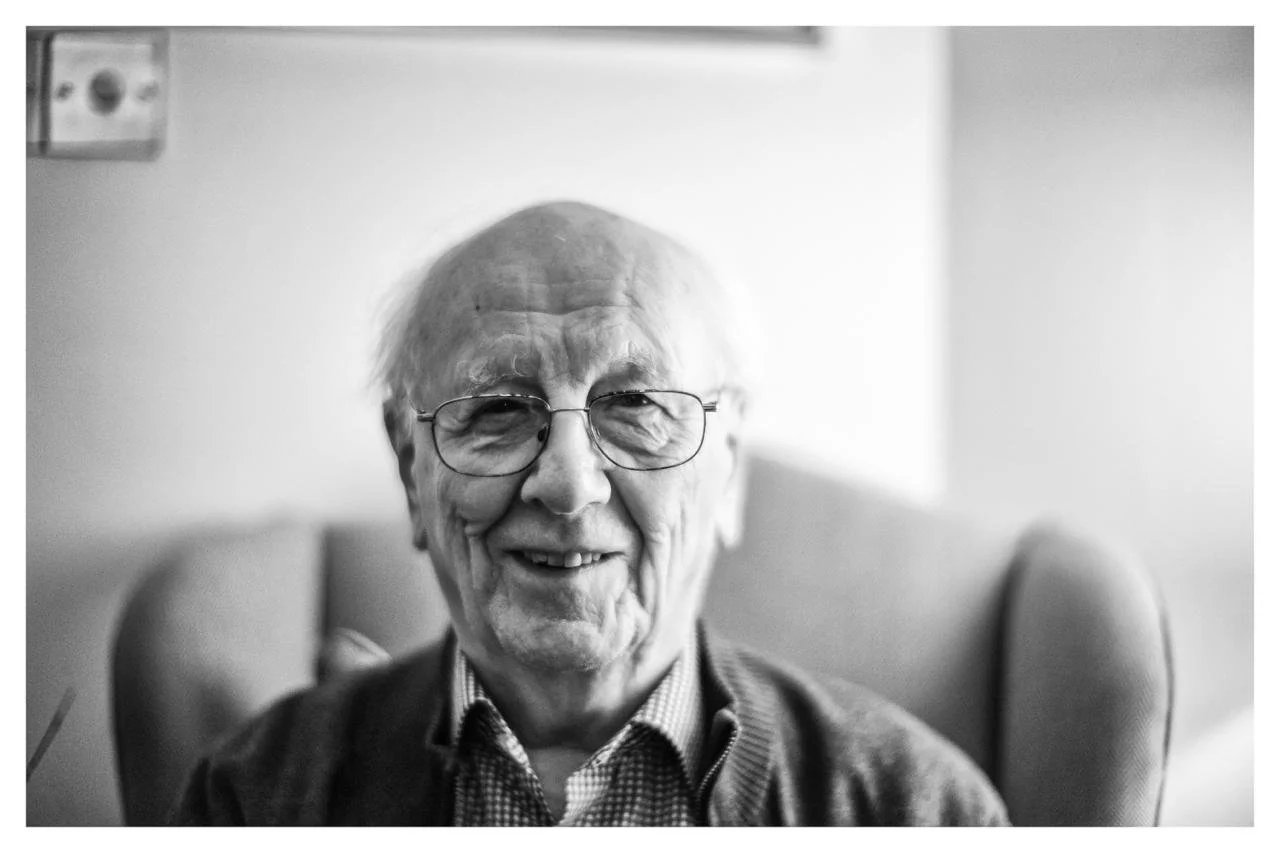
Peter Unwin (1932-2026)

February 20, 2026 Stephen Unwin

My dad loved history.

He read thrillers, spy stories and history books. The thicker the better.

And in talking about him today I want to suggest the ways he reacted to the history he lived through— and draw out five lessons that I think he showed us. 

I can imagine him wrinkling his nose in disapproval if I burble, so I’ll keep to the point.

First, don’t be a snob

Dad was born in 1932. He came from a modest background and, despite Ampleforth, Oxford and a distinguished diplomatic career, he hated snobbery.

He was never a member of the Garrick Club, was sceptical about the Monarchy, was bemused to be made a CMG (“Call me God”, he joked) and mostly unimpressed by the rich and powerful.

Second, care about the underdog

In 1955 Dad married Monica, the daughter of refugees from Nazi Germany, and in Hungary saw up close the grim realities of Stalinism. He wrote a terrific book about Imre Nagy, the murdered hero of the Hungarian Revolution, and championed the rights and dignities of oppressed people everywhere.

He marched against the Iraq War and supported Medical Aid for Palestinians. He despaired of American overreach and was appalled by racism and populism.

In his quiet, principled way, I increasingly realise, Dad cared about people born on the wrong side of the tracks.

Third, be a European

Dad was a patriot, who knew that Britain’s place was in Europe. Much of his career was dedicated to the European Union and he was heartbroken by Brexit.

He loved Europe: its history, its values, its forgotten corners.

In recent years I’d sit with him and show him an atlas. “What’s that water there, Dad?” “The Gulf of Finland,” he’d say, quick as a flash. Doh!

Fourth, be precise

Dad cared about language: be precise in the words you use, be precise in your thinking.

And learn to take a brief. 

This is the Foreign Office art of listening to an argument and boiling it down to its essentials.

Ginny and I once went with Mum and Dad and the teenage Laurie and Dan to a house in Italy. One evening, the boys took Dad aside and briefed him on Star Wars; he then briefed them on the Italian Campaign.

They took it in turns to tell us what they’d learnt.

In ten minutes Dad’s mastery of the Star Wars Universe was total.

Fifth, be tolerant

Dad was proud of his family, for all our idiosyncrasies. His constant advice was “You must do as you think fit”. 

Aged 18, I wanted to be a painter: cleverly, Dad helped me apply for art school and was mightily relieved when I decided to go to Cambridge instead.

Paul took a wonderful photo of the two-year-old Bea lecturing Dad on something or other: probably the failings of British foreign policy. They sit there opposite each other and he is smiling with love.

An extra lesson, embrace the silence

When things got too noisy, Dad would say, “I should have become a monk.” I treasure the memory of sitting with him and Joey just a few weeks ago, my silent father and my silent son. They were holding hands. Bliss, really.

Peter Unwin wasn’t a radical and wasn’t a hero. 

But — like many of his generation — he embodied certain qualities of decency, honesty, quiet scepticism and enduring faith which stand out against the noisy darkness that surrounds us today.

He set an example which I, for one, will never forget, and for which I am eternally grateful.  

May he rest in peace.

(Spoken at my father’s funeral; 17th February, 2026)

Some Thoughts on the SEND Review

February 16, 2026 Stephen Unwin

As the Education Secretary Bridget Philipson prepares to deliver the Government's long-awaited white paper on Special Educational Needs and Disabilities (SEND), the siren calls for something to be done about the costs of educating the nation’s disabled children have become ever louder. 

Days after the Local Government Association warned that eight out of ten councils could face bankruptcy due to the rising costs of SEND provision, the Government announced it would spend £5 billion cancelling their debts. This may ease council fears of financial calamity — but only adds to the narrative that costs have spiralled out of control, rising 60 percent in the last six years. The Times was swift to put these escalating costs down to “sharp-elbowed” parents in wealthier areas, reflecting a view that is popular in the right wing press and eagerly parroted by opportunistic politicians: that Britain is facing an epidemic of “over-diagnosis” thanks to some noxious combination of snowflakery, entitlement and greed. Meanwhile, parents, clinicians and educationalists insist that the needs of disabled children and young people are real — and to blame them for the breakdown of a system that is, in fact, woefully failing them is not merely unfair but a callous misdirection. 

The debate — if that’s not too generous a term — has been cruel and at times exhausting. As the father of a young man (Joey, aged 29) with no speech, severe learning disabilities and intractable epilepsy, it feels personal. What both sides can hopefully agree upon is that the current system is broken and needs urgent reform. But my fear is that a generation of children is about to lose their legal right to an education. Given how hard the struggle to gain that right has been, this would represent an enormous backwards for equality in this country.

*

It is worth remembering how we got here. The Provençal doctor Jean Marc Itard (1774-1838) can claim to be the founder of special education. Hearing of a non-verbal, feral 11-year-old boy who had spent his childhood in the woods of Aveyron in southwest France, Itard spent six long years trying to teach him speech and language, and rudimentary social skills. He eventually gave up on Victor (as he called him) as a lost cause — but Itard’s account of his systematic, if sometimes brutal, methods provided a template for the many approaches that followed.

By the mid-19th century, the Enlightenment dream of “educating the idiot” had given way to greater pessimism. Confining thousands of children with learning disabilities in asylums and so-called “colonies”, far removed from mainstream society, became the norm. It was also in this period that terms such as “idiot”, “imbecile” and “moron” were first used in this context. By the early 20th century, the British eugenics movement enjoyed the support of many progressive educators, intellectuals and politicians. The Nazis were so disgusted by these so-called “useless eaters”, whom they dismissed as a drain on the public purse, that they murdered tens of thousands of them.

It is often assumed that the defeat of Hitler’s Germany ushered in an assertion of universal human value. But the 1944 Education Act, one of the most cherished achievements of the postwar welfare state, divided children into two distinct groups: the “educable” and the “ineducable”. Schools for the “educationally subnormal” were established for those on the borderline, but a small cohort was rejected as not worth the trouble. Their destiny was to live in overcrowded “long-stay hospitals” for the rest of their lives, ignored and almost entirely forgotten.

It took until 1967 for this practice to be challenged, when the Austrian refugee and special educationalist Stanley Segal wrote his remarkable polemic, No Child is Ineducable. This paved the way for the 1970 Education (Handicapped Children) Act, whose chief objective was to bring educational segregation to an end. Progress was slow, however, and Segal was compelled to produce a follow-up in the 1980s which challenged politicians to deliver on what they had promised. But a parliamentary report as late as 2009 declared that the system was still “living with a legacy of a time when children with Special Educational Needs were seen as uneducable”.

Furthermore, the 1970 Act didn’t resolve how these promises should be delivered in practice. An inquiry chaired by the philosopher Mary Warnock recommended that the negative concept of educational “handicap” should be replaced with the more generous catch-all, “special needs”. The resulting 1981 Education Act insisted on support within mainstream schools wherever possible, with special schools reserved for the small number of children with defined disabilities. 

New Labour stressed the ideal of “inclusion”. Thus, the 2001 SEND Act stipulated that children with learning disabilities should enjoy the same educational opportunities as their non-disabled brothers and sisters — with “reasonable adjustments” made to ensure that they could, for the most part, attend mainstream schools. The Act outlawed educational discrimination and launched the system of SEND Tribunals, whereby parents could appeal against decisions made by the education authorities.

This rare moment of optimism was not to last, however. Complaints mounted that children with learning disabilities were holding back their more able peers, and David Cameron’s coalition government set out to “end the bias” towards inclusion. 


The result was the 2014 Children and Families Act, a carefully considered attempt to deliver a more holistic approach. One of its key innovations was the introduction of Education, Health and Care Plans (EHCPs) designed to offer a person-centred, joined-up description of a child’s individual needs and to specify the particular support that local authorities were legally obliged to deliver. 

EHCPs were largely welcomed by parents and educators alike. In recent years, however, these documents have become increasingly contentious — described by some as “golden tickets”, a means of parents, especially middle-class ones, to “game the system”. Last year rumours abounded that EHCPs were going to be abolished altogether. We’ll see. However, limiting them to children with only the most severe and complex needs seems the most likely outcome. 

All this is taking place against a background where politicians increasingly cast doubt on the validity of professional diagnoses. Late last year, the Health Secretary Wes Streeting made his own position explicit, commissioning a review into the “over-diagnosis” of conditions such as ADHD and autism —  lending credibility to claims that have more often been voiced on the Right. Streeting did, to his credit, later retract his claims. Nigel Farage — who wrongly suggested that GPs were responsible — argued that we are “massively over-diagnosing those with mental illness problems and other general behavioural disabilities”. Kemi Badenoch spoke of a cultural shift whereby disabilities have changed from something “people should work on themselves” to “something that society, schools, and employers have to adapt around”. 

The history of learning disability is riddled with similar anxieties, resulting from similar category errors. Thus,the rapid expansion in the early 20th century of the number of people branded as “feeble-minded” — a category that lumped together schizophrenics, depressives, alcoholics and unmarried mothers — directly fuelled the proliferation of inhumane asylums and “mental defective colonies”. Indeed, the Edwardians spoke of such people as a “social menace”

But the current rhetoric is something different. By denying the validity of professional diagnoses, a number of frankly ignorant politicians and journalists have placed the blame for the cost of the SEND system on the young people affected, their parents and the clinicians.   

*

Of course, behind all this, lurks the contentious question of funding. As the rising number of SEND diagnoses have placed budgets under extreme pressure, local authorities have discovered a range of money-saving loopholes — which turn out not to save money after all.

Thus, as The National Audit Office recently reported, £2bn is spent every year on transporting disabled children and young people to school. But many local authorities are refusing to provide such transport to disabled children over the age of 16. This is because the 2015 legislation, which mandated education or training for all young people failed to update the guidance on SEND transport to include young people from 16 to 19. The result is that many cannot attend school unless their parents pay for taxis or can drive them themselves — often long distances to one of the small number of special schools in the country. One mother I know has had to find £400 per month to ensure that her 18-year-old disabled son can enjoy the same right to an education as his non-disabled peers.  And she’s confronted every morning by the sight of half empty minibuses driving disabled younger children past her house to school. Theory has trumped practice and families pay the price.

Resorting to such loopholes suggests that the oft-repeated commitment to equal rights in education is wafer thin. Indeed, I’m told by sources familiar with the process that the panels who make the decisions about educational placements are urged by budget holders to turn down any option which costs more than the bare minimum. The result is predictable: vast sums of public money are squandered on legal services to fight parents at the tribunals which follow, with a 2023 report putting the figure at almost £80 million a year. This has led to a tragic breakdown in confidence between families and their local authorities, with the rights and dignities of disabled children betrayed yet again. 

To add insult to injury, a recent investigation carried out by Isos, a research and advisory company, seemed to place blame for these problems on the growing number of disabled children and their “demanding parents”. As one commentator put it, the “research and recommendations appear to be aligned with the financial concerns of local government, rather than those of children and young people being let down”. It’s time we stopped blaming children and their families. It is, quite simply, a form of gaslighting.

The reality is that, as with so much in Britain, the SEND system has become tragically contested. Many local authorities are reluctant to issue an EHCP, or lack the expertise to do so properly. Writing one is in any case a tortuous process, requiring reams of expert evidence, with parents advised to describe their child’s disabilities in the most negative terms imaginable. Even when an appropriate EHCP is agreed on, success depends on securing not just a place at the right school, but also the vanishingly rare specialist intervention required: speech and language and occupational therapy, dyslexia support, and so on. 

The irony is that the EHCPs are a well-designed tool which identifies individual needs and provides the legal framework necessary for addressing them. Crucially — and almost entirely overlooked amid the current noise — they describe more than just education, and include health (“H”) and social care (“C”) needs, thus providing crucial support for children from impoverished or troubled backgrounds as well as those with health issues such as my Joey, who required a residential setting suitable for his intractable epilepsy. The crucial point is that every child is different and every child has different requirements. We can only deliver on the great ideal of “person-centred” educational support if we engage with the wide range of challenges that our children and young people face.

The EHCPs are not perfect and could be streamlined, but parents know that they offer the last legal bastion protecting the rights and dignities of their disabled children. The financial challenges faced by local authorities will not magically disappear if EHCPs are abolished. Scrapping them would not curb the rate of diagnoses either — it would simply serve to shoot the messenger.

It's not as if parents of disabled children aren’t hard pressed enough already. As Scope’s “Disability Price Tag” indicates, families with a disabled member have to find on average an additional £1,095 per month to achieve the same standard of living as non-disabled ones. In other words, the state is hardly keeping disabled children and their families in the lap of luxury.

What’s more, as a new report by the charity Cerebra has concluded, instead of receiving help, parents “face a relentless, hostile, and bureaucratic fight for basic support. They are met with disbelief, repeated assessments, and processes that leave them feeling blamed or broken.” In sum, they experience “systems-generated trauma”.  Surely they deserve better.

Meanwhile, politicians who are concerned about the rising costs of educating disabled people should stop blaming the children — and start looking into where the money is actually being spent. Private finance has poured into the sector in recent decades, creating a highly profitable network of independent special schools, academy trusts and residential care settings. Senior management, property developers and shareholders have all benefitted handsomely from the huge fees that they can extract from local authorities. This money could be used to make children’s lives better. Instead it is being extracted by a small army of lawyers, consultants and financiers. If there is a system that is being gamed, here it is. 

*

Finally, we should consider a grim but significant statistic: the median life expectancy for a (white) man with learning disabilities is 63, compared with 81 for the general population. There are many reasons for this, but the dreadful consequence is that the vast majority of people with learning disabilities will never draw a state pension, receive winter fuel allowance or travel benefits, let alone incur any of the considerable costs incurred in health and social care by an ageing population. It’s a brutal fact that short lives cost the state less money.

Meanwhile, every child, regardless of cost, regardless of ability, has a legal and moral right to an education. It is hard to imagine politicians questioning whether society can afford the £8,500 a year that, on average, we spend on non-disabled children, whatever their academic abilities. And so, the underlying question remains: are we prepared to grant children and young people with learning disabilities the same educational opportunities as their non-disabled siblings? 


If the answer is “no” — if we conclude that some children are fundamentally “ineducable” — we must abandon our cherished notions of equality of opportunity and universal human rights. But if, instead, we insist that that all children have an inalienable right to an education, we must bring rationality, pragmatism and a renewed sense of shared humanity to ensure that every young person, whatever their differences, receives the support that they need, so they can thrive, grow and realise their potential.

It shouldn’t be hard to figure out where to stand.
Books in 2025

January 11, 2026 Stephen Unwin

Books in 2025

In January 2024 I started to do a thing I used to do when I was in my late teens: write down the title of every book that I read as I finished it.  I then posted the list in early January 2025.  I’ve kept it up and am doing the same this year. 

I can’t imagine that this is hugely interesting to anyone but may spark some connections, make some recommendations, open some brains (mine included) and generally stand against the misery of the times..

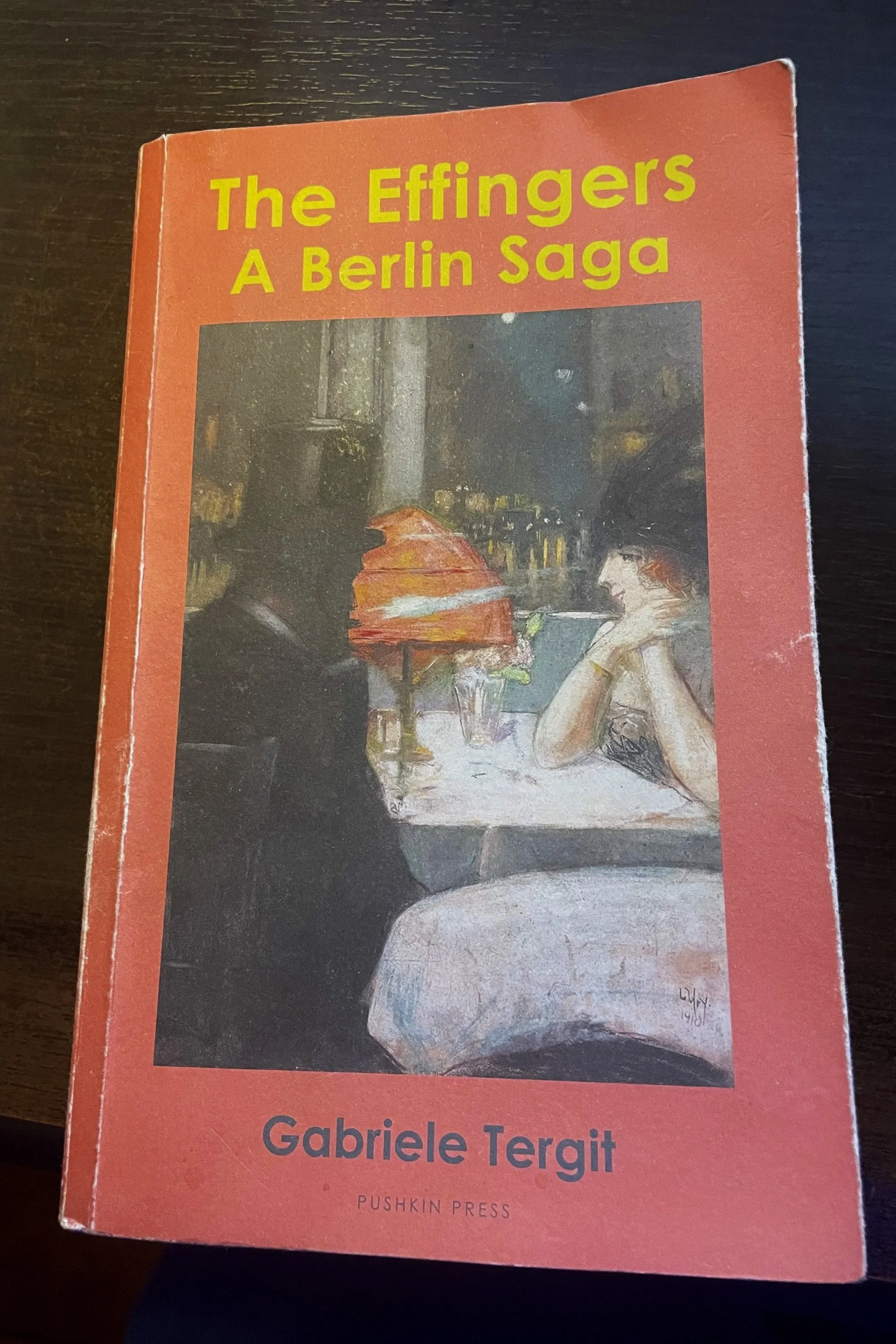
Having said that, a lot of my reading this year has been about the grim and all too current subject of fascism and the many writers who opposed it, with brilliant novels in translation by Gabrielle Tergit, Lionel Feuchtwanger, Peter Weiss  and Ignazio Silone.  There’s quite a lot of history about the subject too, including Timothy Snyder’s harrowing BLOODLANDS and Martin Pugh’s study of British fascism.

But then there’s a thread of something entirely different: Jane Austen, Elizabeth Gaskell, the marvellous Barbara Pym and the great nineteenth century Danish novelist Henrik Pontoppidan.  And rounding off the year was Volume Three of Chateaubriand’s astonishing MEMOIRS FROM BEYOND THE GRAVE.

Anyway, here it is. Do with it as you will.


*


TIME’S ECHO Jeremy Eichler

THE AUTUMN GHOST Hannah Wunsch

THE FATE OF ABRAHAM Peter Oborne

THE VILLAGE OF BEN SUC Jonathan Schell

THE UNDERGROUND SEA John Berger

GERMINAL Émile Zola

ON TYRANNY Timothy Snyder

EMMA Jane Austen

A FORTUNATE WOMAN Polly Morland

ELIZABETH GASKELL Jenny Uglow

BLOODLANDS Timothy Snyder

BLOOD AND POWER John Foot

THE ALIENATION EFFECT Owen Hatherley

THE FROG IN THE THROAT Markus Werner

THE RESISTANCE Matthew Cobb

SYLVIA’S LOVERS Elizabeth Gaskell

MALAPARTE Maurizio Serra

THE WEIMAR YEARS Frank McDonough

THE AESTHETICS OF RESISTANCE (III) Peter Weiss

CRANFORD and COUSIN PHILLIS Elizabeth Gaskell

SHIRLEY Charlotte Brontë

FASCISM: THE STORY OF AN IDEA Ian Dunt and Dorian Lynskey

THE DIRECTOR Daniel Kehlmann

MAYBE I’M AMAZED John Harris

‘HURRAH FOR THE BLACKSHIRTS!’ Martin Pugh

LEARNING WITH LEARNING DISABILITY Owen Barden

FONTAMARA Ignazio Silone

BREAD AND WINE Ignazio Silone

THE SEED BENEATH THE SNOW Ignazio Silone

THE GIRL WITH THE GOLDEN EYES Honoré de Balzac

LONG ISLAND COMPROMISE Taffy Brodesser-Akner

MIAOW Benito Pérez Galdós

VERTIGO: THE RISE AND FALL OF WEIMAR GERMANY Harald Jähner

CONVERSATIONS IN SICILY: A NOVEL Elio Vittorini

THE OPPERMANNS Lion Feuchtwanger

TRISTANA Benito Pérez Galdós

WINDS OF THE NIGHT Joan Sales

THE BIRDS Tarjei Versaas

BEAUTIFUL MYSTERY Danilyn Rutherford

THE WHITE BEAR Henrik Pontoppidan

CRITICAL HEALTH AND LEARNING DISABILITIES Sara Ryan

THE SWEET DOVE DIED Barbara Pym

A FORTUNATE MAN Henrik Pontoppidan

MILTON AND THE ENGLISH REVOLUTION Christopher Hill

QUARTET IN AUTUMN Barbara Pym

THE EFFINGERS: A BERLIN SAGA Gabriele Tergit

RADICAL UNIVERSALISM: BEYOND IDENTITY Omri Boehm

FERDINAND, THE MAN WITH THE KIND HEART Irmgard Keun

MEMOIRS FROM BEYOND THE GRAVE 1815-1830 François-René de Chateaubriand


Summary Block
This block is invalid. Please check the block settings and try again.
Featured
Aenean eu leo Quam
Aenean eu leo Quam

Quisque iaculis facilisis lacinia. Mauris euismod pellentesque tellus sit amet mollis.

Read more →

So terrible being the dad of a learning disabled young man. pic.twitter.com/innKcdKFje

— Stephen Unwin (@RoseUnwin) January 1, 2021 " target="_blank" class="sqs-svg-icon--wrapper twitter-unauth">

© Stephen Unwin, 2016. All rights reserved. Portraits by Edmond Terakopian. With thanks to Nathan Markiewicz.