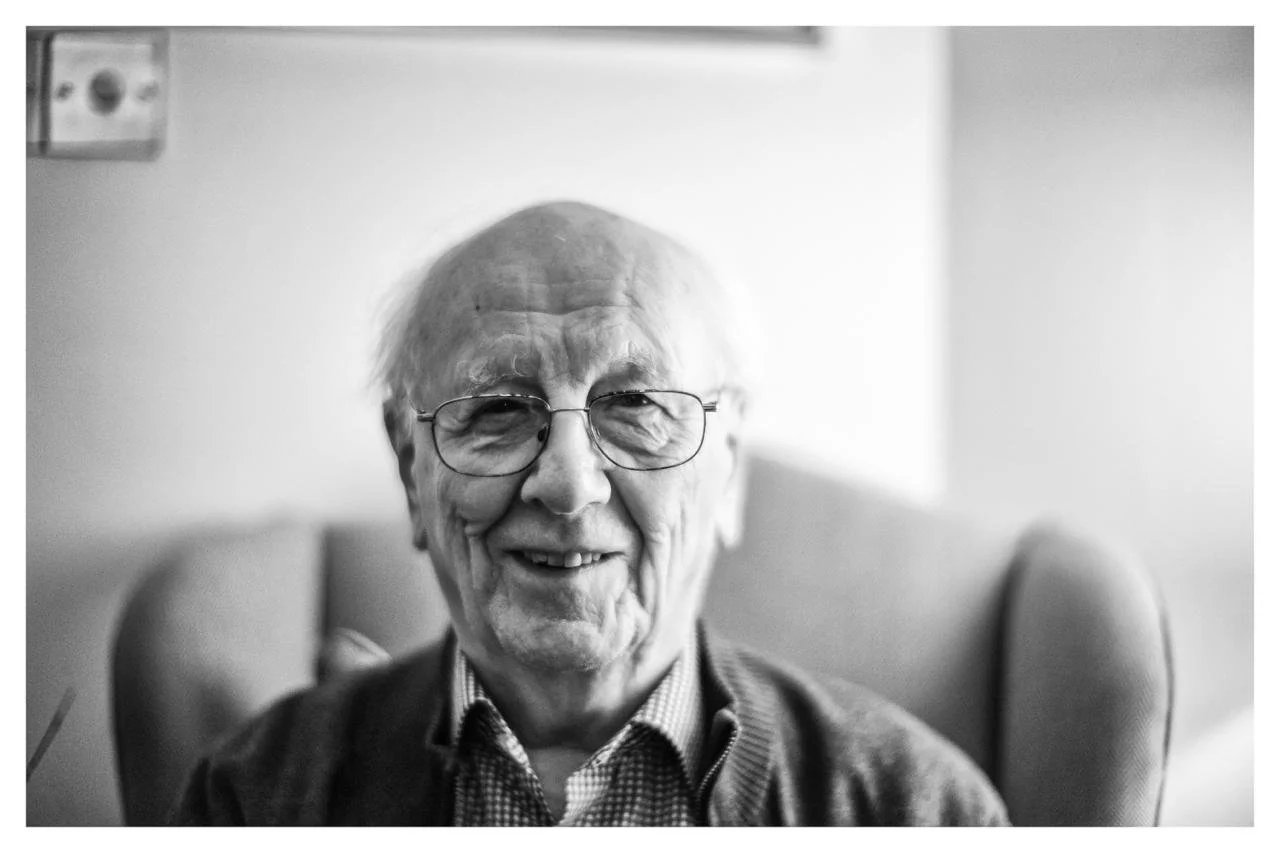
My dad loved history.
He read thrillers, spy stories and history books. The thicker the better.
And in talking about him today I want to suggest the ways he reacted to the history he lived through— and draw out five lessons that I think he showed us.
I can imagine him wrinkling his nose in disapproval if I burble, so I’ll keep to the point.
First, don’t be a snob
Dad was born in 1932. He came from a modest background and, despite Ampleforth, Oxford and a distinguished diplomatic career, he hated snobbery.
He was never a member of the Garrick Club, was sceptical about the Monarchy, was bemused to be made a CMG (“Call me God”, he joked) and mostly unimpressed by the rich and powerful.
Second, care about the underdog
In 1955 Dad married Monica, the daughter of refugees from Nazi Germany, and in Hungary saw up close the grim realities of Stalinism. He wrote a terrific book about Imre Nagy, the murdered hero of the Hungarian Revolution, and championed the rights and dignities of oppressed people everywhere.
He marched against the Iraq War and supported Medical Aid for Palestinians. He despaired of American overreach and was appalled by racism and populism.
In his quiet, principled way, I increasingly realise, Dad cared about people born on the wrong side of the tracks.
Third, be a European
Dad was a patriot, who knew that Britain’s place was in Europe. Much of his career was dedicated to the European Union and he was heartbroken by Brexit.
He loved Europe: its history, its values, its forgotten corners.
In recent years I’d sit with him and show him an atlas. “What’s that water there, Dad?” “The Gulf of Finland,” he’d say, quick as a flash. Doh!
Fourth, be precise
Dad cared about language: be precise in the words you use, be precise in your thinking.
And learn to take a brief.
This is the Foreign Office art of listening to an argument and boiling it down to its essentials.
Ginny and I once went with Mum and Dad and the teenage Laurie and Dan to a house in Italy. One evening, the boys took Dad aside and briefed him on Star Wars; he then briefed them on the Italian Campaign.
They took it in turns to tell us what they’d learnt.
In ten minutes Dad’s mastery of the Star Wars Universe was total.
Fifth, be tolerant
Dad was proud of his family, for all our idiosyncrasies. His constant advice was “You must do as you think fit”.
Aged 18, I wanted to be a painter: cleverly, Dad helped me apply for art school and was mightily relieved when I decided to go to Cambridge instead.
Paul took a wonderful photo of the two-year-old Bea lecturing Dad on something or other: probably the failings of British foreign policy. They sit there opposite each other and he is smiling with love.
An extra lesson, embrace the silence
When things got too noisy, Dad would say, “I should have become a monk.” I treasure the memory of sitting with him and Joey just a few weeks ago, my silent father and my silent son. They were holding hands. Bliss, really.
Peter Unwin wasn’t a radical and wasn’t a hero.
But — like many of his generation — he embodied certain qualities of decency, honesty, quiet scepticism and enduring faith which stand out against the noisy darkness that surrounds us today.
He set an example which I, for one, will never forget, and for which I am eternally grateful.
May he rest in peace.
(Spoken at my father’s funeral; 17th February, 2026)
