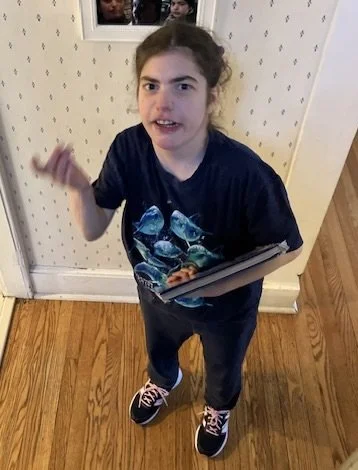
My daughter Rachel, who is 30 years old, began attending a day program for adults with disabilities in 2017. There are many adult day programs here in the suburbs of New York City, but this one seemed perfect because it was small (under ten participants), had a low ratio of participants to staff, and offered field trips multiple times each week. Each Friday, participants went to a restaurant for lunch – not just fast food restaurants, but restaurants with servers and menus. There were trips to bowling alleys, farms for pumpkin and apple picking, department stores, movie theaters and even a trip to an ice-skating show.
Soon after Rachel started in her day program, I learned of a federal rule requiring day programs to keep participants out “in the community” for more than 50 percent of each day for the program to qualify for public funding. This “community integration” mandate aimed at ensuring that day program participants interacted with non-disabled people in settings outside their physical day program buildings. Sadly, the 50 percent mandate resulted in programs choosing field trips to distant locations (for example, traveling to a shopping mall many miles away, instead of the local mall) to maximize the hours reportable as “community” time.
Then came the pandemic, and everything changed. With day programs closed for a year or more, many staff members found other work and never returned when programs reopened. The staffing shortages that began in 2021 persist today, along with the pervasive acceptance of staying indoors. A publication from our state says that “there is no longer a standard requiring all day program participants to spend the majority of their time in the community.” And, under President Trump, both the federal Department of Health and Human Services and the Justice Department have reversed course on certain community integration requirements.
Nine years after Rachel started attending her day program, the field trips which made the program so attractive have all but disappeared. Friday lunches at restaurants first gave way to picking up food at drive-throughs and bringing it back to the program building, then turned into pizza delivery. A recent field trip, called a “nature drive,” turned out to be nothing more than a ride in the program van with the opportunity to look out its window.
A recent text message from Rachel’s day program manager reads: “Good morning due to some unforeseen events we can no longer have pizza for community lunch…Also moving forward community lunch will only be twice a month.…”
No pizza? In the New York City suburbs, pizza is a universal food - pizza places are everywhere. When I questioned the pizza ban, I was told that there were choking incidents, and that staffing shortages and the use of substitute staff who do not know program participants (who now number 26) make pizza too risky. It was hard to make sense of this after nine years of being encouraged to send in pizza for Rachel’s birthday and for other special occasions.
The pizza ban at first brought to mind a well-known laugh line from the comedy series Seinfeld – “no soup for you.” But far from being funny, it has triggered sorrow and anger in me. Perhaps it was the casual tone of the text message, the lack of any reason given for the decision, the apparent absence of attempts at a solution or intention to find one, or the lack of an apology to people who love pizza and will miss it. The text made me realize, not for the first time, how easy it is to take something away from someone like my daughter who cannot speak and so cannot question why it is gone.
Meaningful community integration cannot be mandated any more than love can be mandated. Until society places more value on the day-to-day, moment-to-moment quality of life of people like Rachel, until the people working with people like Rachel bring love into their decision-making, the little joys of life, like sharing a pizza with friends, may be taken away from them seemingly without a thought.
